
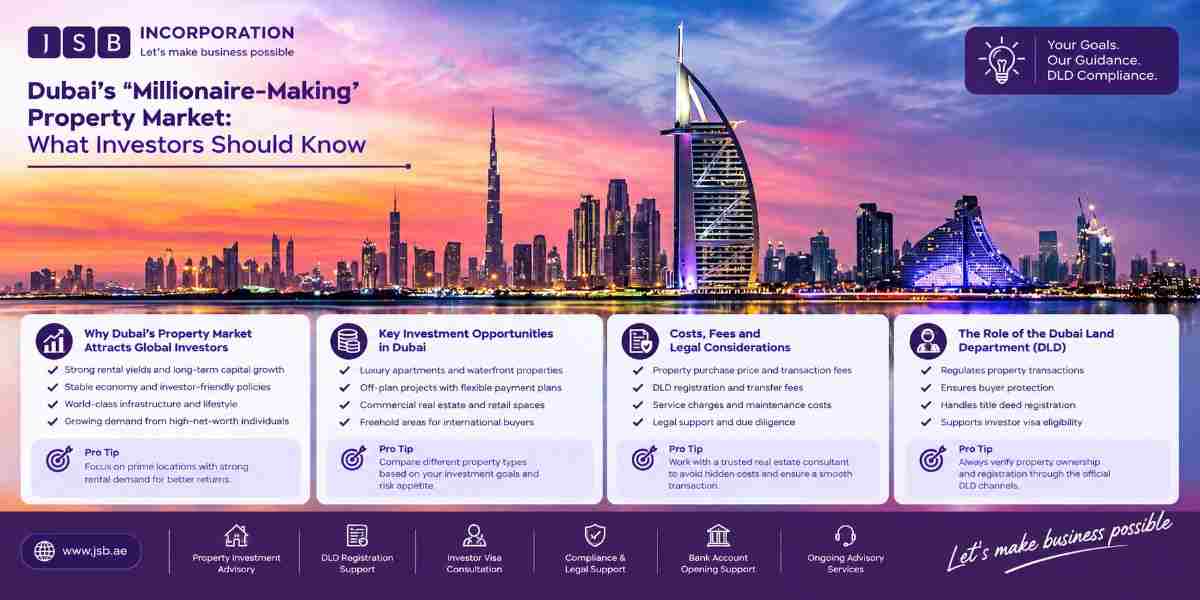
Dubai property can contribute to long-term wealth, but buying a home is not an automatic route to becoming a millionaire.
The useful question for investors is how a particular property can build net wealth after costs, borrowing, and changes in market conditions.
W Capital’s underlying analysis identifies appreciation, rental income, and reinvestment as potential contributors, while warning against assuming that every buyer achieves the same outcome.
Dubai’s official 2025 results provide context for the discussion. Real estate investments exceeded AED680 billion across approximately 258,600 deals, increasing 29% in value and 20% in number compared with 2024.
The investor base reached approximately 193,100, with residents accounting for 56.6% of investors. These are full-year 2025 figures, not a measure of investment activity across the whole of 2026.
The definitions also matter. The AED680 billion investment figure is separate from the AED917 billion in total real estate transaction value reported for 2025; neither measures investors’ profits.
Similarly, millionaire population statistics should not be mistaken for evidence of property-generated fortunes. The figure of 81,200 resident millionaires cited in the coverage comes from Henley & Partners’ 2025 wealth report.
Capital appreciation increases an asset’s value, while rental income can provide ongoing cash flow. Reinvesting surplus income offers another potential route to expanding a portfolio, provided the investor can manage costs and retain sufficient liquidity.
However, a higher valuation is not the same as a realized profit. Purchase and selling expenses, maintenance, service charges, and borrowing costs affect the final result, while vacancy reduces the income available during ownership.
For prospective buyers, the practical task is therefore to assess the individual asset: its purchase price, realistic rental income, operating expenses, financing commitments, and intended holding period. A strong city-wide investment story does not replace that calculation.
The strongest reason to avoid a one-sided reading is the latest price evidence. PropertyIndex’s mix-adjusted residential index recorded cumulative growth of 64.5% over the five years to September 2026, but the same release showed prices down 4% year-on-year and 0.5% month-on-month.
These measures describe different time horizons and can both be true. The index uses sales registered with the Dubai Land Department and adjusts for changes in the mix of properties sold. It is not a return guaranteed to an individual buyer.
Performance also differed by segment. In September, apartment prices were down 4.5% year-on-year and villa prices were down 1.1%, according to the platform’s segment indices. Investors should therefore avoid applying a historical market-wide gain to every location, building, or purchase date.
Development activity adds another consideration. The Dubai Land Department reported that 104 projects were completed in the first half of 2026, adding 24,537 units to the market. In an October update, the department confirmed that the completed projects’ value exceeded AED111 billion.
Those figures describe completed development, not guaranteed demand for each property. The investment assessment still needs to address project quality, intended use, rental potential, and resale prospects rather than relying on the market’s overall scale.
A property investment review should cover more than the advertised price:
1. Does buying Dubai property guarantee wealth?
No. W Capital’s analysis describes opportunities for wealth accumulation, not a promise that every buyer becomes a millionaire. Outcomes depend on the asset, costs, timing, and financial management.
2. Are Dubai property prices still rising?
The answer depends on the period and segment. PropertyIndex’s September 2026 residential release showed a five-year gain of 64.5%, alongside a 4% year-on-year decline.
3. What should investors prioritize?
The relevant measures are net income, growth in equity, liquidity, and the ability to hold the property through different market conditions, rather than headline sales totals alone.
Discuss your objectives, budget, and ownership plans with JSB before deciding your next steps.

Office 2505, 25th Floor, Regal Tower, Business Bay, Dubai, UAE P.O Box 27614.
+971 4 824 4842
info@jsbincorporation.com
