
 Gaurav Keswani
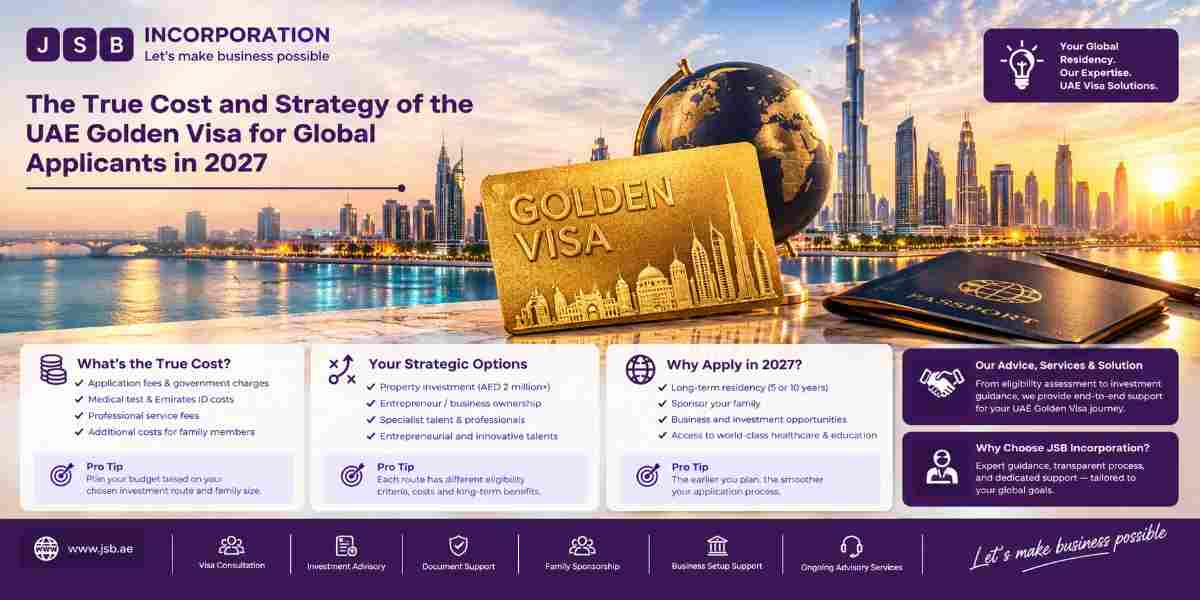
The United Arab Emirates has fundamentally restructured its economic landscape, moving away from a transient expatriate workforce to build a permanent, capital-deploying resident population.
At the heart of this transformation is the UAE Golden Visa, a legislative framework that grants a renewable, 10-year residence visa to foreign investors, highly skilled professionals, entrepreneurs, and exceptional talents.
For global high-net-worth individuals and corporate executives, the UAE is more than just a geographically prime hub. It represents a zero-personal-tax jurisdiction ideal for global wealth management, international business mobility, and long-term family settlement.
However, executing a seamless transition requires deep strategic planning. The financial and regulatory architecture of the UAE Golden Visa in 2027 goes far beyond simple investment thresholds. It involves complex initial capital outlays, disparate federal and emirate-level processing infrastructures, cross-border document attestation, and mandatory health insurance frameworks.
This guide breaks down the granular realities of regulatory qualifications, administrative fees, corporate structuring, and the strategic financial planning required for global applicants pursuing long-term establishment in the UAE.
Before analyzing administrative costs, it is crucial to establish the exact capital thresholds and regulatory qualifications that dictate eligibility.
The UAE has bifurcated eligibility into capital-intensive routes and talent-based routes, each carrying distinct verification standards governed by the Federal Authority for Identity, Citizenship, Customs & Port Security (ICP) and local authorities like Dubai’s General Directorate of Residency and Foreigners Affairs (GDRFA).
The real estate investment pathway remains the primary vehicle for foreign capital entering the Dubai property market. The federal mandate requires a minimum property investment of AED 2,000,000.
A common market misconception is that this threshold must be met through the outright purchase of a single, completed residential unit. In reality, the regulatory framework enforced by the Dubai Land Department (DLD) expressly permits the amalgamation of multiple properties to reach the threshold.
An investor can diversify their portfolio by acquiring multiple smaller units, including both residential and commercial assets, provided the cumulative value registered in the applicant’s name meets the statutory minimum.
Off-plan properties and those encumbered by a mortgage are also permitted, subject to the applicant furnishing a bank letter or developer statement confirming the total amount paid to date and the outstanding balance.
A critical regulatory distinction exists regarding joint ownership. When two individuals, such as a married couple, purchase a property jointly, each individual’s equity share must independently meet the AED 2,000,000 threshold to qualify for independent visa sponsorship.
Therefore, a married couple seeking independent UAE Golden Visas through a 50/50 joint ownership structure must acquire an asset valued at no less than AED 4,000,000.
Beyond real estate, the public investment pathway requires a fixed capital deployment of AED 2,000,000 into an accredited investment fund or a UAE bank deposit, held for a minimum of two years.
Alternatively, capital can be contributed to a commercial company, or the applicant can provide evidence of paying at least AED 250,000 annually in federal tax.
Below is a quick overview of the key insights:
Investment Category | Capital Requirement | Permitted Asset Types | Visa Validity |
Real Estate (Sole Owner) | Minimum AED 2,000,000 | Ready, Off-plan, Residential, Commercial | 10 Years |
Real Estate (Joint Owner) | AED 2,000,000 per applicant share | Ready, Off-plan, Residential, Commercial | 10 Years |
Public Investment / Fund | Minimum AED 2,000,000 | Accredited Investment Funds, Bank Deposits | 10 Years |
Corporate / Tax Contribution | AED 250,000 annual federal tax | Corporate Entities, SME structures | 10 Years |
For individuals who do not wish to deploy heavy upfront capital, the UAE provides extensive talent and executive pathways.
The Skilled Professional route demands that the applicant hold an attested bachelor’s degree, secure an occupational classification at Level 1 or 2 under the Ministry of Human Resources and Emiratisation (MOHRE), and earn a basic monthly salary of no less than AED 30,000.
This requirement applies strictly to the basic salary component, excluding housing or transportation allowances and must be evidenced via a formal salary certificate and corresponding banking records.
The entrepreneurial route mandates the ownership of an enterprise generating a minimum of AED 1,000,000 in annual revenue or the founding of an innovative project valued at AED 500,000.
The Exceptional Talents category targets individuals demonstrating extraordinary proficiency in culture, arts, sports, digital technology, or scientific research.
For instance, researchers and specialized scientists holding a PhD, demonstrating a Scopus h-index of 20 or above, and securing a recommendation from the Emirates Scientists Council are exempt from traditional financial metrics.
Educational excellence pathways also exist, offering 10-year residency to university graduates who achieve a cumulative GPA of 3.8 from globally recognized institutions (or 3.5 from specific UAE-classified universities) if applied within two years of graduation.
Here is a quick overview:
Talent / Education Category | Primary Eligibility Metric | Authority Endorsement Required | Visa Validity |
Skilled Professional | AED 30,000 Basic Monthly Salary | MOHRE (Level 1 or 2) | 10 Years |
Entrepreneur | AED 500,000 Valuation / AED 1M Revenue | Ministry of Economy / Incubator | 5 to 10 Years |
Exceptional Talent | Prestigious International Award | Relevant Ministry / Authority | 10 Years |
Outstanding Student | 3.5 to 3.8 GPA (within 2 years of graduation) | Ministry of Education / ICP | 10 Years |
The financial execution of acquiring a UAE Golden Visa cannot be analyzed in a vacuum. It is inextricably linked to the cross-border capital control mechanisms enforced by the applicant’s home country.
To transfer the requisite capital for real estate or bank deposits, international residents must navigate their local foreign exchange frameworks, which may impose strict annual caps on outward remittances.
Because the AED 2,000,000 property threshold equates to approximately USD 545,000, applicants from jurisdictions with stringent capital controls may not be able to independently transfer the total required capital within a single financial year.
Executing the transaction might require pooling the limits of multiple family members or staggering the remittances across multiple fiscal years.
Furthermore, severe liquidity constraints can stem from home-country tax regulations, such as wealth exit taxes or taxes collected at source on outward foreign investments. Depending on the jurisdiction, transferring large sums abroad can attract significant advance tax collection rates.
While these collections often function as an advance payment against the individual’s annual income tax liability, they create a massive opportunity cost.
Investors may be forced to lock substantial capital in government coffers entirely interest-free for extended periods, vastly complicating liquidity planning prior to entering the UAE market.
Once capital deployment parameters are satisfied, applicants face the administrative processing phase. The UAE operates a dual-track system. Applicants interact either with the federal authority (ICP) or emirate-level authorities like the GDRFA.
For property investors executing transactions within Dubai, the DLD provides an integrated processing route via the DLD Cube platform. The total consolidated government cost through the DLD is a flat AED 9,884.75.
This fee does not scale proportionally with the value of the property and encompasses medical fitness examinations, Emirates ID issuance, and residence permit confirmation.
Below are more details:
Component (Dubai DLD Route) | Mandated Fee (AED) |
Mandatory Medical Fitness Examination | 700.00 |
Emirates ID Issuance (10-Year Validity) | 1,153.00 |
Residence Permit Confirmation (10 Years) | 2,856.75 |
DLD Valuation, Typing, and Administration | 5,175.00 |
Total Consolidated Main Applicant Cost | 9,884.75 |
Conversely, applicants utilizing the federal ICP portal for talent routes face a modular fee structure.
While the foundational cost for the digital issuance of a 10-year residency visa is listed at AED 1,200, this excludes prerequisite medical testing (AED 320 to AED 900 for VIP processing), physical Emirates ID issuance (AED 1,153), and inside-country status change fees (AED 500 to AED 1,600).
Factoring in all mandatory inputs, the true out-of-pocket government expense for an applicant utilizing the federal talent routes typically lands between AED 3,900 and AED 7,200.
For foreign nationals pursuing a Golden Visa via talent, education, or employment routes, document attestation represents a significant bureaucratic hurdle. The UAE government requires foreign educational degrees, marriage certificates, and birth certificates to traverse a rigid legalization pipeline before they are recognized locally.
The document must first be notarized locally in the applicant’s home country and authenticated by the respective regional authorities. It is then elevated to the national Ministry of Foreign Affairs (or equivalent), a process often facilitated by outsourced agencies that apply commercial service charges and courier fees.
Following the national seal, the document requires legalization by the UAE Embassy in the home country. The final stage is handled by the UAE Ministry of Foreign Affairs (MOFA) within the Emirates.
When aggregating notary fees, statutory costs, commercial markups, and consular fees, the end-to-end legalization of personal documents can inject significant shadow costs ranging from AED 2,000 to AED 5,000 into the visa budget for a standard family unit.
A distinct advantage of the UAE Golden Visa is the robust, autonomous family sponsorship framework. A Golden Visa holder possesses the legal right to sponsor their spouse, children, and parents without relying on corporate HR departments or standard salary minimums.
The DLD fee schedule standardizes the cost of adding dependents at exactly AED 5,774.50 per person for a 10-year residency visa, plus nominal administrative file opening fees.
The regulatory environment regarding family sponsorship is highly accommodating, contrary to pervasive market myths:
Financial modeling for a UAE Golden Visa must account for recurring annual compliance, the most significant being mandatory health insurance. Visa validity is legally contingent upon the applicant proving they possess valid UAE health insurance coverage for themselves and all sponsored dependents.
In Dubai, baseline essential plans range from AED 1,200 to AED 4,500 annually per individual. However, for comprehensive networks suited to the high-net-worth demographic, premium tiers scale rapidly.
A family of four settling in the UAE must model a recurring annual outflow of AED 12,000 to AED 20,000 exclusively to maintain legal health insurance compliance.
For international entrepreneurs who lack the upfront liquidity for real estate but possess operational business acumen, the UAE’s free zone ecosystem presents a strategic vector to Golden Visa eligibility.
Founders frequently utilize free zones to incorporate offshore entities, generating the corporate chassis necessary to apply for standard investor visas and eventually qualify for the Golden Visa upon meeting the AED 1,000,000 annual revenue metric.
The corporate landscape surrounding this ecosystem was recently modernized by Federal Decree-Law No. (20) of 2025. These sweeping legislative enhancements align UAE corporate governance with international private equity standards:
The UAE levies zero personal income tax, zero capital gains tax, and zero inheritance tax. However, strategic planners must differentiate between long-term immigration status and legal tax residency.
A primary motivation for many expats relocating is to legally sever their tax residency in their home country and shield global income by leveraging a Double Tax Avoidance Agreement (DTAA).
The Golden Visa grants the privilege of maintaining residency without the traditional requirement of physically entering the UAE once every 180 days.
However, accessing DTAA treaty benefits requires a formal Tax Residency Certificate (TRC) issued by the UAE Federal Tax Authority (FTA). The issuance of a TRC remains strictly contingent upon proving physical presence within the UAE for a statutorily defined number of days during the calendar year.
The Golden Visa provides zero exemption from the FTA’s physical presence threshold. An applicant who acquires the residence visa but fails to physically relocate their center of vital interests to the UAE may remain a tax resident of their home country, fully liable for taxation on their global income.
Additionally, recent updates under Federal Decree-Law No. (17) and No. (16) of 2025 have tightened the tax procedure framework, introducing strict 5-year limitation periods on VAT refunds and granting the FTA greater audit capabilities to prevent tax evasion arrangements.
1. Does an off-plan property qualify for the Golden Visa?
Yes, off-plan and mortgaged properties qualify for UAE Golden Visa eligibility, provided the total contractual property value registered with the DLD (Oqood or Title Deed) is at least AED 2,000,000.
The UAE no longer enforces a minimum upfront paid-equity threshold. However, the applicant must furnish a developer statement of account or a bank No Objection Certificate (NOC) detailing the amount paid to date and the outstanding balance.
2. Does the AED 30,000 minimum salary requirement apply to all categories?
No, the AED 30,000 basic monthly salary requirement is exclusively applicable to applicants utilizing the Skilled Professional and Executive pathways.
Investors entering via the real estate, corporate capital, or entrepreneurial routes are exempt from submitting salary certificates.
3. Can a free zone company migrate to the mainland?
Yes. Under Federal Decree-Law No. (20) of 2025, a statutory re-domiciliation mechanism allows a free zone company to transfer its registration to the mainland without dissolving the entity, thereby maintaining its legal history.
4. How do home-country capital controls affect a property purchase in Dubai?
Outward remittances for foreign real estate can attract advance taxes or be subject to annual volume limits depending on the applicant’s local jurisdiction.
This can create a significant upfront liquidity trap or require staggered investments, necessitating meticulous cash flow modelling prior to capital deployment.
5. Are dependent children subject to age limits for sponsorship under the Golden Visa?
Unmarried daughters and children of determination face no age limits. For unmarried sons, while federal Golden Visa guidelines allow sponsorship regardless of age, local processing centers (including the DLD) routinely apply age 25 as the standard threshold.
Sponsoring an unmarried son above 25 typically requires supplemental proof of financial dependency or enrollment in higher education, subject to emirate-level approval.
The pursuit of the UAE Golden Visa by global applicants is a highly sophisticated exercise in cross-border capital deployment. The headline government cost of the visa fluctuating between AED 4,000 and AED 9,884.75 represents merely the tip of the iceberg.
Ultimately, the UAE Golden Visa is not just a commodity to be purchased. It is an ongoing legal and financial status to be managed. The benefits from autonomous family sponsorship to integration into a premier zero-personal-tax and business-friendly jurisdiction are unparalleled.
However, capitalizing on these benefits requires global applicants to execute holistic financial planning, acknowledge strict physical presence requirements for tax optimization, and look far beyond superficial application fees.
Book your free consultation call with JSB to discuss your investments for the UAE golden visa.
Also Read:
Can a Short-Term Rental Property Qualify for the UAE Golden Visa?
Can a Property Dispute Impact a Golden Visa Application in the UAE?
What Are the Conditions to Keep the UAE Golden Visa Active?
UAE Golden Visa vs. Investor Visa: Which Is Better for a Long-Term Stay?
Why is the Golden Visa the Safest Option for Real Estate Investors in the UAE?

Office 2505, 25th Floor, Regal Tower, Business Bay, Dubai, UAE P.O Box 27614.
+971 4 824 4842
info@jsbincorporation.com