
Key Highlights
The UAE’s fintech market is projected to reach $52.07 billion in 2026 and grow to $90.06 billion by 2031 at an 11.58% compound annual growth rate, according to Mordor Intelligence.
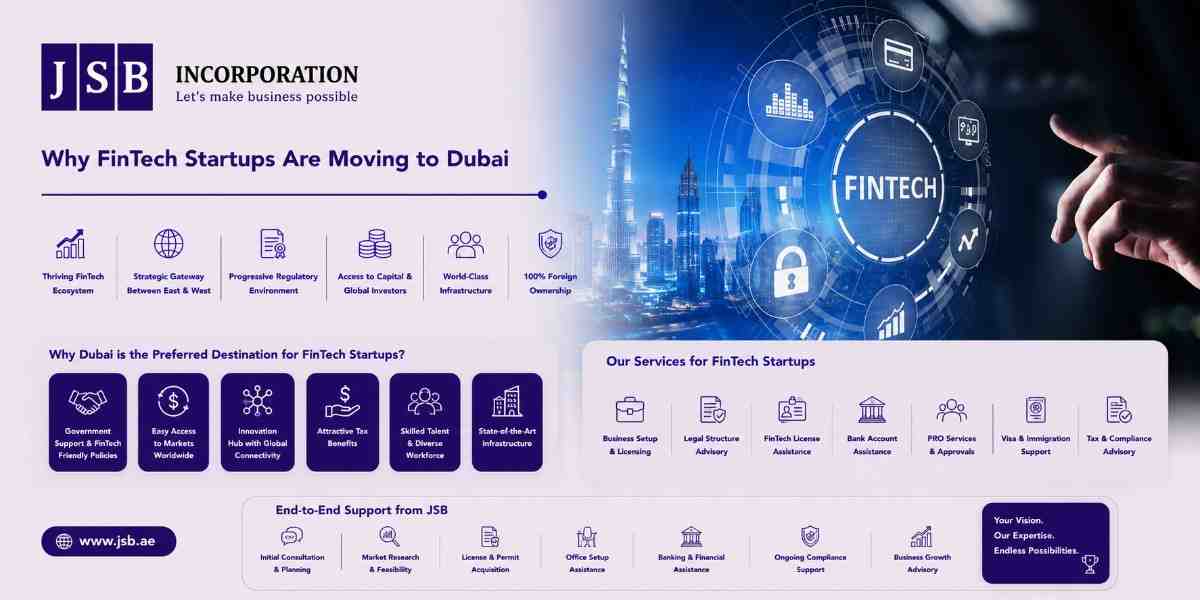
This guide covers six verifiable reasons why fintech founders are picking Dubai over London, Singapore, and Bangalore, including regulation, tax, free zone setup, location, capital access, and visas.
Dubai holds 7th place overall in the Global Financial Centres Index (GFCI 39, March 2026), assessed independently across 120 financial centers by the Z/Yen Group.
It’s the only Middle East financial center to break into the global top 10, sitting alongside New York, London, Hong Kong, Singapore, San Francisco, and Shanghai. That ranking isn’t self-declared. It’s measured by an independent organization that has published the GFCI consistently for nearly two decades.
Here’s what’s behind that ranking:
The D33 Economic Agenda, the UAE government’s official economic blueprint, names fintech as a priority sector in its goal to rank among the world’s top four global financial centers (UAE Ministry of Economy).
You’re not moving to a market that’s trying to figure out fintech. You’re moving to one that’s committed billions to building the infrastructure for it.
You’ll choose from three regulatory paths when setting up a fintech company in Dubai: CBUAE for mainland payment services, DFSA under DIFC for international fintech, and FSRA under ADGM for digital assets and Islamic fintech. Each path has a different scope, capital requirement, and timeline.
The Central Bank of the UAE (CBUAE) governs retail payment services, digital wallets, stored value facilities, and open banking on the UAE mainland, across nine license categories under the Retail Payment Services and Card Schemes Regulation.
Federal Decree-Law No. 6 of 2025, effective 16 September 2025, expanded CBUAE oversight to DeFi, virtual asset payments, open finance, and enabling technology providers.
If your startup falls into any of those newly covered categories, you need to secure the required CBUAE license by 16 September 2026. That’s a hard deadline worth acting on now.
The DFSA’s Innovation Testing License lets you test your fintech product with real users before committing to full licensing requirements. That’s a tool most founders don’t know exists.
DIFC runs under English common law, which removes the legal friction you’d face contracting in civil law jurisdictions. The typical DIFC or ADGM licensing timeline runs 5 to 7 months, which is faster than the FCA in the UK at 12 to 18 months, or MAS in Singapore at 6 to 12 months.
Your Startup Type | Recommended Path | Regulator |
Payment services, digital wallets, open banking | UAE Mainland | CBUAE |
International fintech, capital markets | DIFC Free Zone | DFSA |
Digital assets, Islamic fintech | ADGM | FSRA |
Early-stage, non-regulated tech activity | IFZA / Dubai Silicon Oasis | No financial regulator required |
If you set up in a UAE free zone, you pay 0% personal income tax and may qualify for 0% corporate tax on qualifying income.
If you operate on the UAE mainland, corporate tax applies at 9% on taxable income above AED 375,000, as confirmed by the Federal Tax Authority under Federal Decree-Law No. 47 of 2022, effective June 2023.
Here’s the full tax picture for your Dubai fintech setup:
Two updates took effect on 1 January 2026 that directly affect your operations. Federal Decree-Law No. 17 of 2025 on Tax Procedures, issued by the Ministry of Finance, introduced a five-year VAT refund limitation period and granted the Federal Tax Authority the power to issue binding directions on tax law interpretation, creating a more predictable compliance environment.
Federal Decree-Law No. 16 of 2025 on VAT removed the requirement to issue self-invoices under the reverse charge mechanism, which cuts administrative work on your B2B transactions and enables the Federal Tax Authority to deny input tax deductions where a supply is part of a tax evasion arrangement.
Both decrees reflect the UAE’s tax framework moving closer to international best practices: structured refund timelines, anti-evasion enforcement, and consistent legal application (Ministry of Finance).
Disclaimer: All tax figures are based on official UAE government legislation at the time of writing. Corporate tax rates, thresholds, and free zone qualifying income conditions are subject to change. Verify current rates directly with the Federal Tax Authority before making any tax or structuring decisions.
You can incorporate a fintech startup in a Dubai free zone in a matter of days, with 100% foreign ownership, 100% profit repatriation, no minimum share capital for most activity types, and the entire process completed digitally.
The UAE has over 40 free zones, and the Ministry of Economy confirms 100% foreign ownership, 100% profit repatriation, and 100% customs duty exemption across all of them.
To put it in practical terms: a founder based outside the UAE can submit incorporation documents to IFZA digitally, receive a trade license, and apply for an Establishment Card without traveling to Dubai.
Physical presence is only required for Emirates ID registration and visa stamping, which you can schedule in a single trip once your entity is already active.
A major legal update made the free zone model even more flexible for your scaling plans. The UAE Commercial Companies Law Amendment, Federal Decree-Law No. 20 of 2025, effective 15 October 2025, brought in these key changes:
For real cost reference, here’s IFZA’s 2026 pricing based on the official April 2026 IFZA price list:
IFZA Package | Annual Cost (AED) | What’s Included |
Zero Visa License | 11,900 | License, FlexiDesk, 3 business activities |
1-Visa License | 14,900 | License, 1 free lifetime residence visa, FlexiDesk |
2-Visa License | 16,900 | License, 1 free lifetime visa, 2 FlexiDesks |
3-Visa License | 18,900 | License, 1 free lifetime visa, 3 FlexiDesks |
Additional business activities beyond the three included a cost of AED 1,000 each, up to a maximum of seven (IFZA Schedule of Fees, February 2026). Your Establishment Card, required before processing any visa, costs AED 2,000 for the initial application (IFZA Schedule of Fees, February 2026).
Disclaimer: IFZA pricing is accurate as per the official April 2026 price list and February 2026 Schedule of Fees. IFZA reserves the right to change pricing without prior notice. Confirm all fees directly with IFZA or an authorized partner before you proceed.
Dubai’s GMT+4 position means your team, working from one location, overlaps with European, Asian, and African business hours at the same time. No other top-tier financial center gives you that from a single base. You don’t need to split your team across continents to maintain working relationships across three major markets.
Here’s why the surrounding market matters just as much as the location itself:
Yes. As a fintech founder in Dubai, you can qualify for a 10-year UAE Golden Visa, an Entrepreneur Visa, or a Remote Work Visa, depending on your investment level, business activity, and employment status, per ICP (Federal Authority for Identity and Citizenship) and Invest in Dubai.
The UAE Golden Visa is a 10-year renewable residence visa that covers you, your spouse, and your dependents.
Qualifying routes include business ownership at the relevant investment threshold, a minimum AED 2 million real estate investment in Dubai, or classification as a specialized talent, per ICP (Federal Authority for Identity and Citizenship).
The UAE government opened a dedicated hotline for Golden Visa holders, a service previously reserved for UAE nationals only, which signals that long-term residents are treated as a priority here.
For founders targeting MEASA markets, Dubai gives you lower taxes, faster licensing, and lower setup costs than both Singapore and London.
If your primary market is Southeast Asia, Singapore may offer stronger local network depth. If it’s Europe, London still leads on institutional relationships. Here’s how the three compare on the factors that will most directly shape your decision:
Factor | Dubai (Free Zone) | Singapore | London |
Personal income tax | 0% | Up to 24% | Up to 45% |
Corporate tax | 0% qualifying / 9% mainland | 17% | Up to 25% |
Licensing timeline | 5 to 7 months (DIFC/ADGM) | 6 to 12 months (MAS) | 12 to 18 months (FCA) |
Regulatory sandbox | Yes (DFSA ITL, FSRA RegLab) | Yes (MAS sandbox) | Yes (FCA sandbox) |
Primary market reach | MEASA, 2B+ people | Southeast Asia | Europe and Americas |
GFCI overall rank (March 2026) | 7th | 4th | 2nd |
Free zone setup cost | From AED 11,900/year | No equivalent | No equivalent |
Dubai ranked 7th overall in GFCI 39, its highest ever position, assessed across 120 financial centers by Z/Yen Group. Singapore holds 4th and London holds 2nd in the same index.
The gap in ranking reflects historical capital depth and network maturity. The difference in cost and tax hits your bottom line from day one.
Here’s a clear, step-by-step process for getting your fintech company incorporated and operational:
Q1. What license does a fintech startup need to operate in Dubai?
It depends on what your company actually does. The CBUAE issues licenses for payment services, digital wallets, and open banking on the UAE mainland. The DFSA authorizes capital markets and international fintech operations in DIFC.
The FSRA covers digital assets and Islamic fintech in ADGM. If you’re building fintech infrastructure without directly handling customer funds, a standard free zone commercial or professional license covers your activity with no financial regulator involvement required.
Q2. Can a foreign founder own 100% of a fintech company in Dubai?
Yes. Full foreign ownership is available in any UAE free zone. It’s also permitted on the UAE mainland for most business activities under the UAE’s 2021 FDI Law.
The Commercial Companies Law Amendment, Federal Decree-Law No. 20 of 2025, reinforced this by confirming that free zone companies carry UAE nationality and can establish mainland branches without building a separate entity from scratch (UAE Ministry of Economy).
Q3. Do you need to visit Dubai in person to set up a fintech company?
Not for the initial incorporation. Free zones including IFZA support remote company formation with digital document submission. Emirates ID registration and visa stamping, however, do require your physical presence in the UAE (UAE Ministry of Economy).
Q4. What visa can you get when moving to Dubai as a fintech founder?
Your main options are the Golden Visa (10-year, renewable), the Entrepreneur Visa for incubator-approved startups, and the Remote Work Visa (1-year digital residency).
For team members, the IFZA residence visa costs AED 3,750 per 2-year term, with the Establishment Card required at AED 2,000 upfront. Per ICP (Federal Authority for Identity and Citizenship) and Invest in Dubai.
Q5. How does the new CBUAE Law affect your fintech startup?
Federal Decree-Law No. 6 of 2025, effective 16 September 2025, expanded CBUAE oversight to DeFi, virtual asset payments, open banking, and enabling technology providers.
If your startup operates in any of those categories, you need to obtain the required CBUAE license by 16 September 2026. Missing that deadline means operating without the required authorization (Central Bank of the UAE).
Q6. What are the real costs of setting up a fintech in a Dubai free zone?
Using IFZA as a benchmark: your license starts at AED 11,900 per year for the zero-visa package or AED 14,900 per year for the 1-visa package, which includes one free lifetime residence visa.
The Establishment Card costs AED 2,000 for the initial application. Additional team member visas are AED 3,750 per 2-year term each.
Additional business activities beyond the three included a cost of AED 1,000 each, up to a maximum of seven. A FlexiDesk is included in all zero to 3-visa packages at no extra cost (IFZA April 2026 price list; IFZA Schedule of Fees, February 2026).
Q7. Is Dubai suitable for Islamic fintech and digital asset startups?
Yes. ADGM under FSRA is specifically built for Islamic fintech and digital asset regulation. DIFC under DFSA also has a dedicated digital assets framework.
The UAE holds the world’s largest Islamic finance market by assets, which means your Dubai-based Islamic fintech startup has direct access to the deepest institutional client base in this sector (DFSA, FSRA).
Setting up a fintech company in Dubai is genuinely straightforward when you have the right support.
The details matter a lot: which free zone fits your regulatory needs, which visa path works for your team size, and how to structure your entity before your first investor conversation. Getting these wrong costs you months and real money.
JSB Incorporation is a UAE business setup consultancy based at Regal Tower, Business Bay, Dubai (P.O. Box 27614). The team works across 24+ free zone and mainland jurisdictions, including DMCC, IFZA, and JAFZA.
JSB completes setups in weeks, not months, and handles the process end-to-end so you stay focused on building your business rather than chasing paperwork.
Book your free consultation call today with the experts of JSB Incorporation to learn more.
Also Read:
18 Common Business Setup Mistakes in Dubai and How to Avoid Them
UAE Business Setup and Golden Visa in 2026: A Comprehensive Analysis
How Long Does Business Setup Take in UAE in 2026? (Per Jurisdiction) Breakdown)
The Ultimate Comparison: Business Setup in IFZA Free Zone vs. Mainland Dubai

Office 2505, 25th Floor, Regal Tower, Business Bay, Dubai, UAE P.O Box 27614.
+971 4 824 4842
info@jsbincorporation.com
